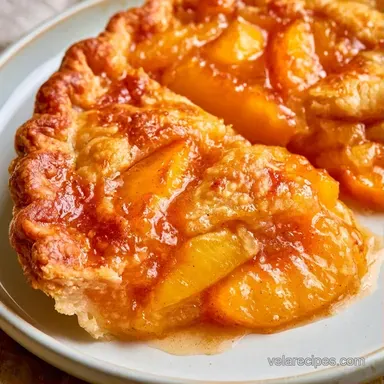
Brown Sugar Peach Pie with a Mahogany Crust

- Prep30 Mins
- Cook55 Mins
- Servings8 slices
- Time: 30 min active + 55 min cooking + 3 h 20 min resting
- Make it when: August, when peaches are at their peak
- Pairs with: A scoop of vanilla bean ice cream or cold heavy cream
Brown Sugar Peach Pie
The sound of a fork cracking through a dark, sugary crust is the best part of this bake. It is not just about the fruit, but the contrast between the bright, acidic peaches and the deep, toasted notes of the filling.
Brown sugar is the hero here. Unlike white sugar, it adds a hint of caramel and a heavier body to the juices. This prevents the filling from tasting like thin syrup and instead gives it a rich, jammy quality.
You can expect a deep-dish result with a dark golden finish on top. It balances the sweetness with a bit of lemon and nutmeg, making it feel like a proper summer dessert.
At a Glance
| Fruit Choice | Prep Effort | Crust Texture | Best For |
|---|---|---|---|
| Fresh Peaches | Medium | Shatteringly Crisp | Sunday Dinner |
| Frozen Peaches | Low | Slightly Softer | Quick Cravings |
| Canned Peaches | Low | Soft | Off-season |
Ingredients and Swaps
The fruit needs to be ripe but not mushy. If your peaches are too soft, they will collapse into a puree.
For the Pastry
- 2½ cups (315g) all-purpose flour
- 1 tsp (6g) salt
- 1 tbsp (8g) granulated sugar
- 1 cup (225g) unsalted butter, chilled and cubed Why this? Cold fat creates the flaky layers
- 8 tbsp (120ml) ice water
For the Filling
- 6 cups (1.2kg) fresh peaches, peeled and sliced
- 3/4 cup (150g) packed light brown sugar Why this? Adds molasses depth and color
- 1/4 cup (50g) granulated sugar
- 3 tbsp (25g) cornstarch Why this? Thickens juices into a glaze
- 1 tsp (2g) ground cinnamon
- 1/4 tsp (1g) ground nutmeg
- 1 tbsp (15ml) fresh lemon juice
- 1/4 tsp (1.5g) salt
For the Finish
- 1 large egg
- 1 tbsp (15ml) water
- 2 tbsp (25g) turbinado sugar Why this? Creates a crunchy, dark golden crust
Gear You'll Need
You don't need fancy gear, but a pastry cutter helps keep the butter cold by speeding up the process. A 9-inch deep-dish pie plate is mandatory here. Standard plates are too shallow and will overflow.
Bringing It Together
Constructing the Flaky Base
Combine 315g all-purpose flour, 6g salt, and 8g granulated sugar in a bowl. Cut in 225g chilled, cubed unsalted butter using a pastry cutter until the mixture resembles coarse crumbs with some pea-sized lumps remaining.
Gradually stir in 120ml ice water, one tablespoon at a time, until the dough just holds together. Divide dough into two discs, wrap in plastic, and chill in the refrigerator for 1 hour.

Preparing the Macerated Filling
Toss 1.2kg sliced peaches with 15ml fresh lemon juice in a large bowl. In a separate small bowl, whisk together 150g light brown sugar, 50g granulated sugar, 25g cornstarch, 2g ground cinnamon, 1g ground nutmeg, and 1.5g salt.
Pour the sugar mixture over the peaches, toss gently, and let the fruit sit for 20 minutes. Note: This lets the cornstarch dissolve so you don't get white clumps.

Assembly and the Two-Temp Bake
Preheat oven to 425°F (220°C). Roll out the first dough disc into a 12-inch (30cm) circle and place it into a 9-inch (23cm) deep-dish pie plate. Pour the prepared peach filling into the crust.
Roll out the second dough disc, place it over the top, trim the edges, and crimp to seal. Beat 1 large egg with 15ml water, brush the egg wash over the top crust and sprinkle with 25g turbinado sugar.
Bake at 425°F (220°C) for 15 minutes until the edges are just starting to set. Reduce oven temperature to 375°F (190°C) and bake for the remaining 40 minutes. Tent the edges loosely with aluminum foil if they brown too quickly.
The pie is done when the filling bubbles at the sides and the crust is a deep golden brown. Let it cool on a wire rack for at least 2 hours before slicing, otherwise the filling will run.

Fixing Common Issues
Preventing a Soggy Bottom
A wet bottom happens when the fruit releases juice faster than the crust can bake. The 425°F start is the fix here. It sears the bottom crust quickly. If you use very juicy peaches, you can sprinkle a teaspoon of flour on the bottom pastry before adding the fruit.
Fixing Runny Filling
If the filling doesn't thicken, it usually means the cornstarch didn't activate or the peaches were too watery. For a brown sugar peach pie, make sure you let the fruit macerate for the full 20 minutes. This ensures the starch is fully integrated before the heat hits it.
Stopping Crust Shrinkage
When the crust pulls away from the edges, it is because the gluten was overworked or the dough was too warm. Chill the discs for at least an hour. When you crimp the edges, don't pull the dough tight, or it will snap back during baking.
Ways to Change It
If you want a different vibe, try adding a pinch of ground ginger to the sugar mix for a zesty kick. For a more rustic approach, you can skip the top crust and use a crumble topping, similar to a peach crisp recipe.
If fresh peaches aren't in season, frozen slices work well. Just thaw them first and drain half the excess liquid so the pie isn't too soupy. For a faster treat, I like brown sugar baked peaches when I don't have time for a full crust.
| Original Ingredient | Substitute | Why It Works |
|---|---|---|
| Fresh Peaches | Frozen Sliced Peaches | Similar flavor. Note: Drain excess water to avoid runny filling |
| Turbinado Sugar | Sanding Sugar | Same crunch. Note: Lacks the molasses hint of turbinado |
| Unsalted Butter | Beef Tallow | High fat content. Note: Changes flavor to be more savory |
Storing Leftovers
Cover slices loosely with foil and store in the fridge for up to 4 days.
This brown sugar peach pie also freezes well if you do it before baking. Wrap the unbaked pie tightly in plastic and foil for up to 2 months. When you're ready, bake it straight from the freezer, but add 15 to 20 minutes to the total cook time.
To get that shattering crust back, reheat individual slices in a 350°F (175°C) oven for 10 minutes. Avoid the microwave, as it turns the pastry chewy.
Serving Tips

For a spectacular look, focus on color balance. The chestnut brown crust is a dark, rich base, so add bright accents. A dollop of stark white whipped cream or a scoop of vanilla ice cream provides the first contrast.
Finish it with a small sprig of fresh mint or a few fresh raspberries on the side. These pops of green and red break up the golden tones of the pie. Add these garnishes just before serving so the mint doesn't wilt from the heat.
Why the Texture Works
The Thermal Shock: Starting at 425°F creates a quick burst of steam from the butter lumps. This pushes the dough layers apart before they can merge, which is what makes the crust flaky.
The Sugar Mix: Whisking cornstarch with the sugars before tossing them with the fruit prevents the starch from clumping. This results in a velvety, smooth glaze instead of a lumpy sauce.
Frequently Asked Questions
Can canned peaches be used instead of fresh?
Yes, but drain them thoroughly. Canned peaches contain more syrup, which can make the filling overly liquid compared to fresh slices.
How to make homemade pie filling from scratch?
Toss sliced peaches with lemon juice. Whisk together light brown sugar, granulated sugar, cornstarch, cinnamon, nutmeg, and salt before stirring the mixture into the fruit.
Will frozen peaches make the filling too wet?
Yes, they release significant moisture. Frozen fruit bleeds more liquid during the baking process, which may result in a less stable filling.
Do store-bought crusts still look homemade?
Yes, they provide a clean finish. While not as flaky as the chilled butter dough used in this recipe, they maintain a professional appearance.
Are apples a good replacement for peaches?
Yes, they work well. Apples create a firmer texture and different tartness; for a variation using a crumble instead of a crust, try our peach crisp.
Brown Sugar Peach Pie with Mahogany Crust