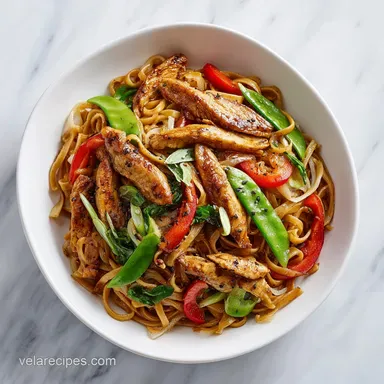
Chicken Lo Mein with Sesame Oil

- Prep15 Mins
- Cook15 Mins
- Servings4
- Time: 15 min active + 15 min cooking + 10 min marinating
- Flavor & Texture: Savory, salty, and silky noodles
- Perfect for: Weeknight dinner rush
Easy Chicken Lo Mein
The sound of a hot wok sizzling and the smell of toasted sesame oil filling the kitchen is the best part of this meal. You get an amber sauce that clings to chewy noodles and bright, crisp vegetables.
It's the kind of dish that solves the "what's for dinner" panic. Making chicken lo mein at home is faster than waiting for a delivery driver, and you control exactly how many veggies go into the pan.
The result is a balanced plate where nothing is mushy. You'll get tender chicken strips and a sauce that tastes like it simmered for hours, even though it takes minutes.
Why This Method Works
- Meat Coating: Mixing cornstarch into the chicken creates a barrier. This keeps the juices inside and gives the meat a smooth texture.
- Staggered Entry: Adding carrots and peppers before the cabbage prevents the softer greens from overcooking.
- Cold Rinse: Rinsing the noodles in cold water immediately stops the cooking process. This keeps them from becoming a sticky clump.
| Noodle Type | Texture | Best For | Impact |
|---|---|---|---|
| Fresh Lo Mein | Chewy & Soft | Traditional style | Authentic bite |
| Dried Spaghetti | Firmer & Leaner | Pantry staples | More "al dente" feel |
| Rice Noodles | Light & gluten-free | Dietary needs | Less sauce absorption |
What You'll Need
Ingredient Deep Dive
| Ingredient | Role | If You Don't Have It |
|---|---|---|
| Cornstarch | Thickens sauce and tenderizes meat | Arrowroot powder (1:1) |
| Oyster Sauce | Adds deep, salty umami | Hoisin sauce (adds more sweetness) |
| Rice Vinegar | Provides a bright, acidic balance | Apple cider vinegar (slightly fruitier) |
| Sesame Oil | Toasty, nutty aroma | Neutral oil with a drop of toasted sesame seeds |
The Shopping List
For the chicken marinade:
- 1 lb chicken breast, thinly sliced into strips
- 1 tbsp low-sodium soy sauce
- 1 tsp cornstarch Why this? Creates a protective layer for the meat
- 1 tsp sesame oil
- 1/4 tsp ground black pepper
For the sauce:
- 1/4 cup low-sodium soy sauce
- 2 tbsp oyster sauce Why this? Gives the sauce a rich, savory base
- 1 tbsp brown sugar
- 1 tbsp chicken broth
- 1 tbsp rice vinegar
- 1 tsp sesame oil
- 1/4 tsp white pepper
For the stir-fry:
- 16 oz fresh lo mein or Hokkien egg noodles
- 2 tbsp vegetable oil
- 3 cloves garlic, minced
- 1 tbsp fresh ginger, grated
- 2 cups shredded cabbage
- 1 cup julienned carrots
- 1 red bell pepper, thinly sliced
- 2 scallions, cut into 2-inch pieces
Recipe Specs
- Prep time: 15 minutes
- Cook time: 15 minutes
- Total time: 40 minutes
- Yield: 4 servings
Essential Gear
A wok is the traditional choice because the high walls allow you to toss ingredients easily. If you don't have one, a large stainless steel or cast iron skillet works. Use tongs instead of a spoon to toss the noodles. This prevents the noodles from breaking.
Bringing It Together
Preparing the Components
- In a medium bowl, combine the sliced chicken with 1 tbsp soy sauce, 1 tsp cornstarch, 1 tsp sesame oil, and 1/4 tsp black pepper. Let it marinate for 10 minutes.
- In a small jar or bowl, whisk together 1/4 cup soy sauce, 2 tbsp oyster sauce, 1 tbsp brown sugar, 1 tbsp chicken broth, 1 tbsp rice vinegar, 1 tsp sesame oil, and 1/4 tsp white pepper until the sugar has dissolved.
- Cook the noodles according to the package instructions. Drain immediately and rinse under cold water, then toss with 1 tsp of vegetable oil to keep them from sticking.

Cooking the Protein and Aromatics
- Heat 1 tbsp vegetable oil in a wok over high heat until shimmering. Add the chicken in a single layer and sear for 3–5 minutes without stirring too frequently until the edges are browned and the meat is cooked to 165°F (74°C). Remove the chicken and set it aside on a plate.

- Reduce heat to medium-high. Add another 1 tbsp vegetable oil, then stir in the minced garlic and grated ginger. Sauté for 30 seconds until aromatic but not browned.
Finishing the Stir-fry
- Increase the heat back to high. Add the carrots and sliced red bell pepper and stir-fry for 2 minutes. Add the cabbage and cook for another 1–2 minutes until just wilted.

- Return the cooked chicken and the drained noodles to the wok.
- Pour the sauce over the mixture. Toss constantly with tongs for 2–3 minutes until the sauce thickens into a glossy coating on the noodles.
- Stir in the scallions for 30 seconds and remove from the heat.
Avoiding Common Pitfalls
Sticking Noodles
This happens if you skip the cold rinse or forget the oil. If the noodles clump in the wok, add a tablespoon of chicken broth or water. This loosens them up so the sauce can coat every strand.
Burnt Garlic
Garlic burns quickly on high heat, making the whole dish bitter. Always lower the heat to medium-high before adding the garlic and ginger. They only need 30 seconds to release their flavor before you add the denser vegetables.
Thin Sauce
If the sauce doesn't thicken, it's usually because the pan wasn't hot enough during the final toss. Keep the heat high and toss constantly. The cornstarch from the chicken marinade helps, but the heat is what actually binds the sauce to the noodles.
Dry Results
If your chicken lo mein feels dry, you may have overcooked the vegetables. Adding a splash of chicken broth at the end can restore the moisture without thinning the flavor too much.
Storage and Reheating
Store the leftovers in an airtight container in the refrigerator for 3 to 4 days. According to USDA food safety basics, perishable foods should be refrigerated promptly.
To reheat, use a skillet over medium heat. Add a tablespoon of water or chicken broth to the pan. Toss the noodles until they are steaming hot and the centre of the chicken reaches 165°F (74°C). This restores the glossy texture and prevents the noodles from drying out.
If using a microwave, sprinkle with a teaspoon of water and cover with a damp paper towel. Heat in 30-second intervals and stir in between.
Serving Suggestions

Plate this in wide bowls to keep the heat in. I like a sprinkle of toasted sesame seeds or a few sliced green onions on top for a fresh crunch. If you want a side, some steamed edamame or a simple cucumber salad balances the richness of the sauce.
Making It Your Own
Garden Harvest
Double the cabbage and add snap peas or sliced broccoli. If adding broccoli, toss it in for 2 minutes before the other vegetables since it takes longer to soften.
Szechuan Spice
Add 1 tablespoon of chili garlic sauce or a teaspoon of red pepper flakes to the sauce mixture. This gives this chicken lo mein a spicy kick that cuts through the sweetness of the brown sugar.
Gluten-free Option
Swap the soy sauce for tamari (labelled gluten-free) and ensure your oyster sauce is a certified gluten-free brand. For the noodles, use wide rice noodles. Note that rice noodles absorb sauce differently, so you might need an extra tablespoon of broth to keep it moist.
For this gluten-free version, also use products labelled gluten-free for all soy sauces, the broth or stock.
If you're in a rush and don't have chicken, you can try a 15 minute lo mein without the meat for an even faster meal.
CRITICAL: Very High in Sodium
1600 mg of sodium per serving (70% of daily value)
American Heart Association recommendation: no more than 2,300 mg of sodium per day
Tips to Reduce Sodium
-
Replace Oyster Sauce
Substitute the oyster sauce with a mushroom-based vegan oyster sauce or a homemade blend of mushroom powder and a touch of maple syrup to maintain the umami flavor.
-
Swap for Coconut Aminos
Replace the low-sodium soy sauce with coconut aminos, which provides a similar salty-sweet taste with significantly less sodium.
-
Use No-Salt-Added Broth
Swap the chicken broth for a no-salt-added version or use water to eliminate the hidden sodium found in commercial stocks.
-
Check Your Noodles
Look for salt-free fresh noodles or substitute lo mein with brown rice noodles to reduce the processed sodium in the pasta.
-
Amplify Natural Aromatics
Increase the amount of fresh ginger, garlic, and add red pepper flakes or a squeeze of fresh lime juice to boost flavor without adding salt.
Good to Know
What differentiates lo mein from chow mein?
Lo mein noodles are boiled and tossed with sauce, whereas chow mein noodles are often stir-fried. This makes lo mein softer and more slippery.
Can I use spaghetti as a substitute?
Use spaghetti if you cannot find lo mein or Hokkien noodles. The result will be firmer and less chewy than traditional noodles.
Is it possible to use steak or chicken thighs?
You can swap the breast for steak or thighs for a richer flavor. Add leftover cooked chicken at the end of the process to avoid overcooking.
How much should I increase the sauce to double the recipe?
Multiply every sauce ingredient by two to maintain the correct ratio for a larger batch. This ensures the noodles remain glossy.
Why is my finished dish dry?
Overcooking the noodles or sauce can cause dryness. Stir in an extra tablespoon of chicken broth to restore the moisture.
Are the noodles included in the ingredient list?
Yes, the recipe calls for 16 oz of fresh lo mein or Hokkien egg noodles. These are boiled and rinsed before being added to the wok.
How do I store and reheat leftovers?
Store leftovers in a closed container and keep them refrigerated for 3 to 4 days. Warm them in a skillet over medium heat with a tablespoon of water or chicken broth. When reheating cooked leftovers, check with a food thermometer that the center reaches 165°F (74°C); the appliance temperature and time alone do not confirm this.
Silky Chicken Lo Mein