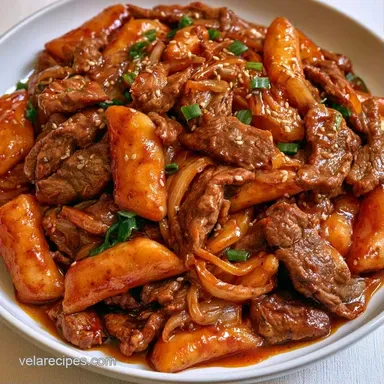
Korean Rice Cake Beef Stirfry: Spicy and Sweet
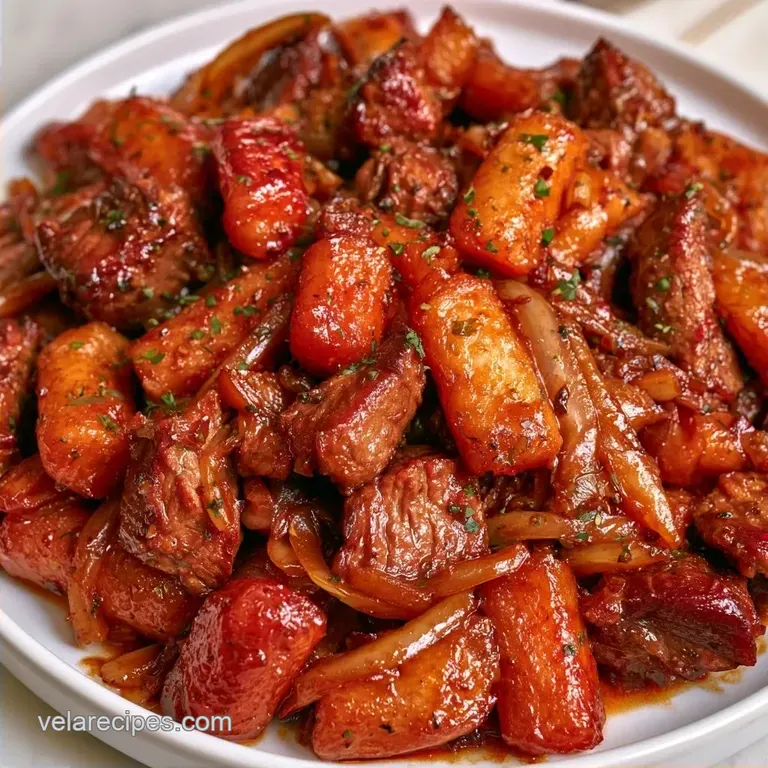
- Time: 15 min active + 15 min cook
- Flavor/Texture Hook: Soft, chewy cakes coated in a shimmering, spicy glaze
- Perfect for: Hectic weeknight meals
The loud, satisfying sear of beef hitting a scorching skillet is the highlight of my evening; it means the meal is actually happening. This recipe became a staple after a particularly chaotic Tuesday.
Between the kids bickering and the dog barking, I wanted that authentic street food flavor without spending two hours on prep.
I've noticed that many people stress over the sauce or worry about the cakes turning mushy. Once I stopped overanalyzing and simply stuck to the timing, everything fell into place.
I turn to this Korean Rice Cake Stirfry whenever I need a guaranteed win in the kitchen without spending my entire night standing over the stove.
You can expect a dish that is both bold and hearty. The beef develops a deep crust, the carrots offer a bit of crunch, and the rice cakes absorb all that spicy sweet goodness. It's comforting, filling, and a total crowd pleaser for anyone who enjoys a bit of heat.
Making the Flavors Pop
Starch Effect: As the rice cakes heat, they release natural starches. This thickens the sauce, helping the glaze cling perfectly to both the beef and the cakes.
Honey Balance: More than just a sweetener, honey provides a beautiful sheen and balances the bold, fermented notes of the gochujang.
High Heat Sear: Searing the beef quickly prevents it from simmering in its own liquid. This ensures a caramelized brown crust rather than dull, gray meat.
| Method | Time | Texture | Best For |
|---|---|---|---|
| Stovetop | 30 mins | Chewy & Glazed | Quick weeknight meals |
| Oven Baked | 45 mins | Softer & Uniform | Large crowds/Meal prep |
Since rice cakes are the main attraction, there are plenty of other ways to enjoy them. For a more soothing option, my Korean rice cakes soup is a wonderful choice for rainy days.
The Quick Dish Details
This recipe focuses on efficiency. We're talking about a total time of 30 minutes from the moment you pull the beef out of the fridge to the moment it hits the table.
The yield is 3 servings, which is great for a small family or for having one portion left over for lunch the next day. It's a budget smart meal because sirloin can be swapped for cheaper cuts, and the rice cakes are generally very affordable at most Asian grocery stores.
Getting Your Groceries Ready
Gathering the Main Components
I like to get everything measured out before I turn on the heat. Stir frying happens fast, and you don't want to be chopping carrots while your beef is burning.
The Sauce Base:
- 3 tbsp gochujangWhy this? Fermented chili paste for depth
- 1 tbsp gochugaruWhy this? Coarse flakes for a clean heat
- 2 tbsp soy sauceWhy this? Salty, umami base
- 1 tbsp rice vinegarWhy this? Cuts through the richness
- 1 tbsp honeyWhy this? For shine and sweetness
- 1 tsp ginger, freshly grated
- 2 cloves garlic, minced
- 2 tbsp water
The Stir Fry Mix:
- 1 lb sirloin beef, thinly slicedWhy this? Cooks fast and stays tender
- 1 lb Korean cylindrical rice cakesWhy this? Classic chewy texture
- 2 tbsp neutral oil
- 1 medium carrot, thinly sliced
- 3 stalks green onions, cut into 2 inch pieces
- 1 tbsp toasted sesame oil
- 1 tbsp toasted sesame seeds
| Ingredient | What It Does | Best Swap |
|---|---|---|
| Sirloin Beef | Hearty protein | Chicken breast (leaner, milder) |
| Gochujang | Spicy/savory base | Miso + Sriracha (similar funk/heat) |
| Honey | Gloss and sweetness | Brown sugar (deeper, molasses taste) |
| Rice Cakes | Chewy bulk | Thick udon noodles (softer texture) |
For those who want a different take on the cakes, try a rice cake pizza for a fun appetizer.
Tools You'll Need
No fancy equipment is required for this dish. All you really need is a large skillet or a wok. To achieve a proper sear on the beef, I recommend using a cast iron or stainless steel pan for better heat retention.
Gather a small bowl for the sauce, a whisk or fork, and a sharp knife for prepping the beef. If you're using frozen rice cakes, you'll also need a colander for rinsing.
Step-by-step Cooking Guide
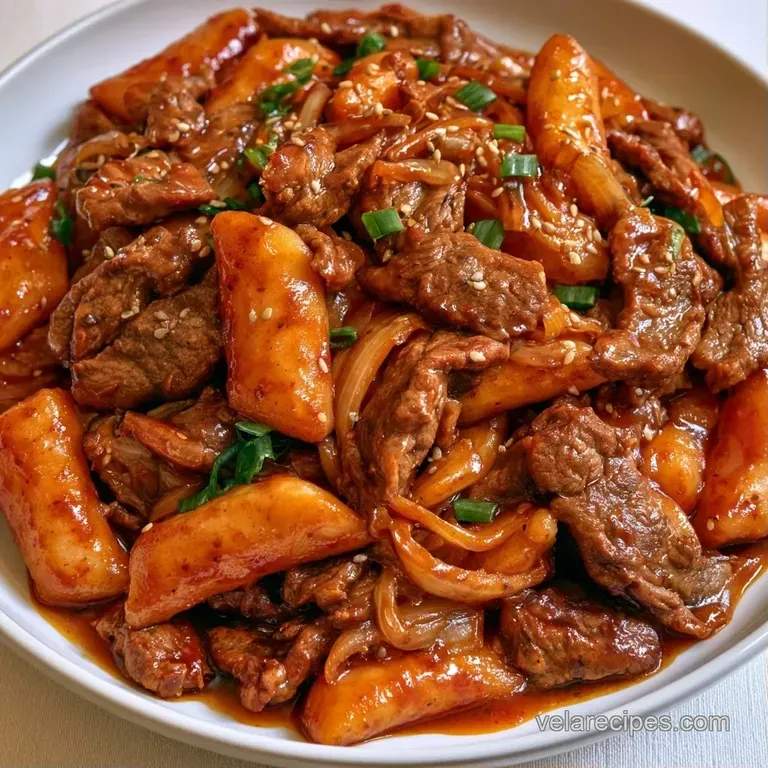
Preparing the Special Sauce
In a small bowl, mix together the gochujang, gochugaru, soy sauce, rice vinegar, honey, ginger, and garlic. Whisk until the mixture is smooth, ensuring the honey is completely blended in to avoid any sweet patches in the dish.
Browning the Beef and Aromatics
Heat the neutral oil in your skillet over medium high heat. Once the oil shimmers, add the sliced sirloin in a single layer. Sear for 2–3 minutes until a deep brown crust forms. Avoid stirring too frequently; allow the meat to brown.
Incorporating the Veggies
Toss in the sliced carrots. Stir fry for another 2 minutes until the beef is just cooked through and the carrots have softened slightly.
Adding the Rice Cakes
Stir the rice cakes into the pan and fry for 2 minutes. You want the cakes to be separated and coated in the beef fat, which prevents them from clumping once the sauce is added.
Creating the Glaze
Pour the prepared sauce over the mixture. Stir constantly for 4–5 minutes. The liquid will bubble and reduce until the sauce transforms into a velvety glaze that clings to everything.
Final Touches
Fold in the green onions during the final 60 seconds of cooking. Remove from heat immediately. Drizzle with toasted sesame oil and sprinkle with sesame seeds.
Chef's Tip: If using frozen rice cakes, soak them in warm water for 10 minutes first. This ensures they cook evenly so the outside doesn't get mushy before the inside is soft.
Fixing Common Cooking Issues
When I first started making Korean Rice Cake Stirfry, I often ended up with a sauce that was too watery or cakes that stuck together in one big lump. It usually comes down to the heat or the prep.
Preventing Sticky Rice Cakes
Rice cakes are basically pure starch. If they aren't coated in oil or if the pan is too cold, they fuse together. Always sear them for a few minutes before adding the sauce to create a barrier.
Balancing Excessive Heat
If you accidentally added too much gochugaru and the dish is too spicy for your kids, add a teaspoon of brown sugar or a splash of heavy cream at the end. This mellows the fire without ruining the flavor.
Fixing a Thin Sauce
If the sauce hasn't thickened after 5 minutes, your heat might be too low. Turn it up and keep stirring. The starch needs to reach a certain temperature to activate and thicken the glaze.
| Problem | Root Cause | Solution |
|---|---|---|
| Clumping Cakes | Low heat or no oil | Soak in warm water; sear before saucing |
| Watery Sauce | Not reduced enough | Increase heat and stir for 2 more mins |
| Tough Beef | Overcooked | Sear quickly on high; remove from heat early |
Adding Your Own Twist
This dish is highly customizable, making it easy to adapt based on whatever ingredients you have in your refrigerator.
Protein Alternatives
While sirloin is a traditional choice, chicken thighs also work wonderfully; just sear them slightly longer than the beef. For a plant based version, try using extra firm tofu or thick slices of king oyster mushrooms.
Make it Cheesy
To create a more decadent meal, sprinkle some shredded mozzarella over the top during the final minute of cooking. Cover the pan with a lid for 60 seconds to allow the cheese to melt into a gooey layer.
Adjusting the Heat
For a milder flavor, use only a pinch of gochugaru and increase the honey. To make it scorching, stir in a teaspoon of sriracha or some chopped fresh Thai chilies.
| Goal | What to change |
|---|---|
| Less Spicy | Reduce gochugaru, add more honey |
| More Veggies | Add bok choy or sliced cabbage |
| Extra Rich | Stir in 1 tbsp of butter at the end |
Saving and Reusing Leftovers
Keep leftover Korean Rice Cake Stirfry in a sealed container in the refrigerator for up to 3 days.
Reheating Tips: Rice cakes tend to harden when chilled. To restore their texture, add a splash of water or beef broth to a pan and heat over medium, stirring gently until the sauce thins and the cakes become chewy again. Try to skip the microwave, as it often leaves the cakes rubbery.
Zero Waste: Put any leftover onion scraps or carrot ends into a freezer bag to make homemade vegetable stock. If there is sauce left in the bowl, use it as a marinade for grilled chicken or tofu tomorrow.
Best Ways to Serve
This dish is a meal in itself, but some sides make it better. I love serving it with a side of pickled radishes (danmuji) to provide a crisp, acidic contrast to the rich glaze.
If you need more bulk, serve it over a bowl of steamed white rice. The rice soaks up the extra sauce, ensuring none of that flavor goes to waste. A simple cucumber salad with rice vinegar and sesame oil also balances the heat perfectly.
How to Actually Nail This
To get that street food quality, you have to respect the temperature. If the pan isn't hot enough, the beef won't brown, and the sauce won't glaze.
The Beef Trick: Slice your beef against the grain. This breaks up the muscle fibers and ensures every bite is tender, even if you're using a cheaper cut of meat.
The Sauce Secret: Don't add the water if you're using very juicy vegetables. The water is there to help the sauce start as a liquid before it reduces. If there's already plenty of moisture in the pan, skip it to save time.
Debunking Common Myths
Myth: Rice cakes must be homemade. Truth: store-bought cylindrical cakes are actually more consistent for stir frying. They hold their shape better than homemade versions which can be too soft.
Myth: Searing beef seals in the juices. Truth: Searing doesn't "seal" anything. It creates a brown crust that tastes better. You lose moisture regardless, so the key is to cook it fast.
Myth: Gochujang is just "spicy paste". Truth: Gochujang is fermented, meaning it has a deep, salty, and slightly sweet profile. Replacing it with just hot sauce will lose the authentic depth of the dish.
Right then, you've got everything you need to tackle this Korean Rice Cake Stirfry. It's a fast, budget friendly win that brings a bit of excitement to the dinner table. Just remember to keep that heat high and your stir fry motion constant. Enjoy!
Recipe FAQs
How to use rice cake in stir fry?
Add them to the pan after the beef and carrots have seared.
Tip: stir fry for two minutes to ensure they are separated and coated in beef fat.
Why did my tteokbokki rice cake get hard after cooking?
Overcooking the cakes after adding the sauce evaporates too much internal moisture.
Tip: remove the pan from heat as soon as the sauce transforms into a velvety glaze.
What is the best way to make tteokbokki less sweet?
Decrease the quantity of honey in the sauce mixture.
Tip: If you enjoy mastering texture control, check out this similar approach for royal rice cakes.
Is it true that rice cakes must be boiled before stir frying?
No, and here's why. Stir frying them directly in beef fat provides a superior sear and prevents clumping.
Tip: soak frozen cakes in cold water for 15 minutes before cooking to ensure even softening.
Can I fry Korean rice cakes?
Heat neutral oil over medium high heat and sear them until a golden crust forms.
Tip: cook in a single layer to prevent them from sticking together.
Korean Rice Cake Stirfry